ZIP code 90404 is one of the busier and more varied parts of Santa Monica. It includes the Pico neighborhood, part of the Mid-City area and a long stretch of Lincoln Boulevard, one of the city's main commercial corridors. Public listings show apartment buildings and newer residential developments on streets such as Colorado Avenue and Stanford Street, and older homes with detached garages on residential blocks.
Elite Garage Door Repair's business address, 1804 Lincoln Blvd, is in this ZIP code. That does not change our approach or our promises. We do not promise arrival times on this website. What it does mean is that we know these streets and the kinds of buildings on them. This page explains what that mix means for garage doors and gates.
As always, ZIP codes and neighborhoods overlap, and the descriptions here are general rather than official. If you are not sure whether your address is in 90404, call (424) 610-8406 and give us the street address.
What garage doors are like in 90404
Apartment buildings and multi-family properties
Many buildings in this area are multi-family. Some have street-level parking behind a door or gate. Some have small courtyards with a gate. The doors and gates serve many residents, and they open and close many times a day. High cycle counts wear out springs, openers and access hardware quickly.
Small businesses on the corridor
Lincoln Boulevard, Olympic Boulevard and Colorado Avenue have shops, studios, workshops, offices and service businesses. Some use roll-up doors or sectional doors for deliveries, vehicles or storage. Commercial doors have heavier hardware and different springs from house doors. See commercial and multi-unit repair.
Older homes with detached garages
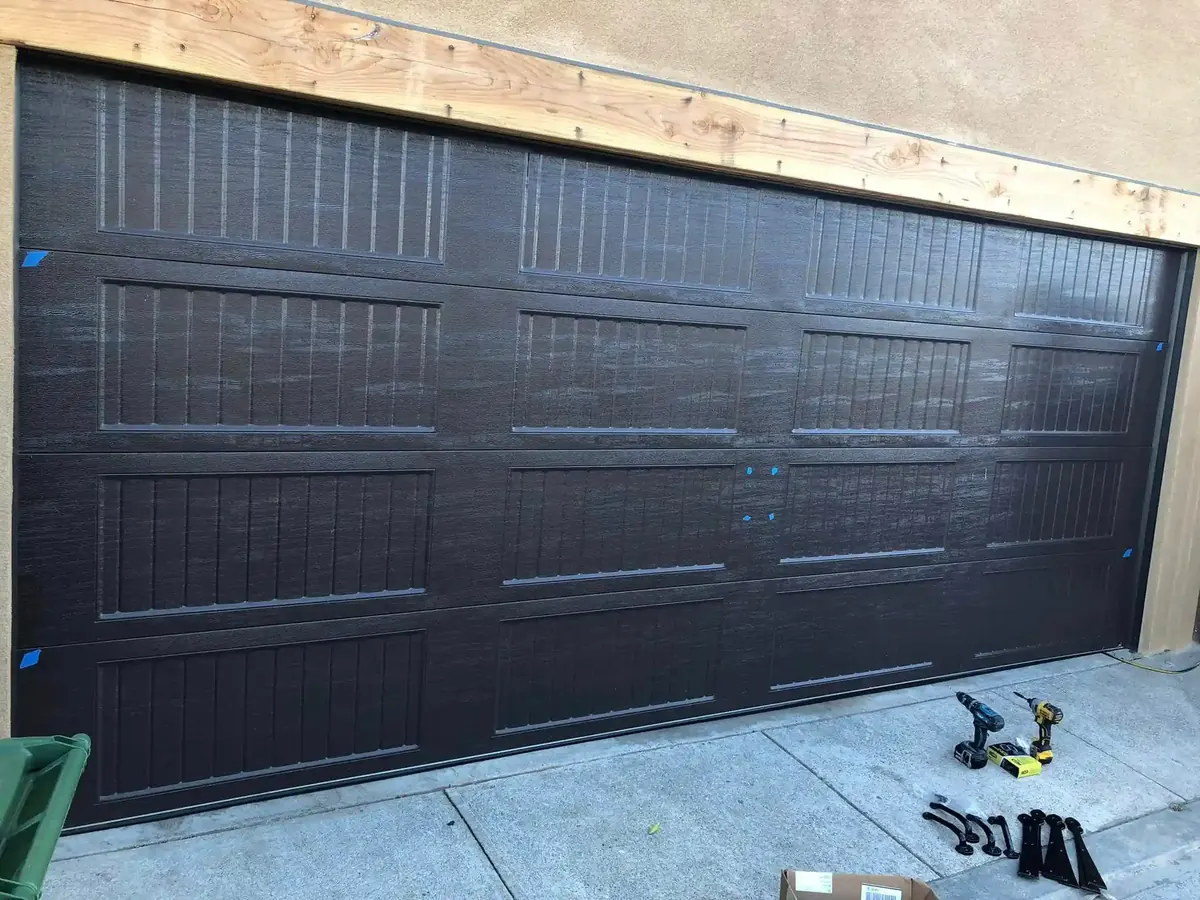
Residential blocks in 90404 include older homes with detached garages. Public listings mention two-car detached garages with alley access on streets near Wilshire Boulevard. These garages often have older doors, older openers and older hardware.
Newer developments
Newer apartments and condos have modern garage doors, gates and access control. These systems combine doors, operators, sensors, keypads, fobs and intercoms.
Roll-up and commercial doors on the corridor
If you own or manage a shop or a workshop on Lincoln Boulevard or a nearby street, your door may be a rolling steel door or a commercial sectional door. These behave differently from a house door.
How roll-up doors work
A rolling steel door is made of interlocking slats that wind around a barrel above the opening. A spring inside the barrel does most of the lifting. The door may be lifted by a chain hoist, a motor operator or a crank.
What fails
- Barrel springs weaken or break, leaving the door heavy or slow.
- Guides bend or fill with debris and the door jams.
- Slats are damaged by a vehicle or a hard bump.
- Operators wear out or overheat from heavy use.
- Rust builds up on the curtain, hood or guides.
- Safety edges and sensors fail or get knocked out of line.
What we need to know
When you call, give us the width and height of the door, its age and the operator type. Photos help. Tell us if the door is used all day or only occasionally, and whether it is in a fire-rated wall. Fire-rated openings have special requirements, and we will tell you if a specialist is needed.
Alley garages behind older homes
Behind many of the houses on residential blocks in 90404 there are alleys and detached garages. Those garages often have older doors that were installed before electric openers were common. Some were later retrofitted with an opener that the door was not built for.
Common problems with older alley garages
- Worn rollers and hinges that make noise and cause binding.
- Springs that are the wrong size or worn out after years of use.
- Openers without a battery backup or modern safety features.
- Bottom seals that are cracked or missing, letting in dust and pests.
- Tracks that are bent from vehicle strikes in the tight alley.
- Wood framing around the door that has shifted, moved or rotted.
What we do
We inspect the whole system, tell you what is worn and give you options. Sometimes a set of springs, rollers and a seal give an old door years more life. Sometimes a new door and a compliant opener are the better value. See installation and replacement.
Repairs we do most often in 90404
Spring replacement on busy doors
Apartment and business doors run many cycles. A standard spring rated around 10,000 cycles may last only months on a door that runs all day. We discuss high-cycle springs. See spring repair.
Opener and operator repair
Heavy use wears gears, trolleys and boards. We repair or replace openers and operators. See opener repair.
Gate repair
Buildings with gated parking or courtyard gates rely on operators, tracks, sensors and keypads. See gate repair.
Off-track and impact damage
Tight lots and alleys lead to strikes. See off-track, cable and roller repair.
Emergency repair
A failed door on a business or an apartment building affects many people right away. See the emergency guide.
For landlords and property managers in 90404
Multi-family owners in this area juggle many buildings and many vendors. A little structure makes garage door service simpler.
- List each door and gate. Record its address, type, size, age and operator brand.
- Assign responsibility. Decide who receives problem reports and who approves work.
- Inspect on a schedule. Busy doors need more frequent checks than quiet ones.
- Keep records. Save quotes, invoices and notes about part replacements.
- Plan replacement. Springs and openers wear on a cycle. Plan ahead.
- Tell tenants how to report problems. A single number saves time.
- Teach safe use. Tenants should not bypass sensors or force stuck doors.
We give a written quote that lists parts and labor so you can review and approve it, and pass it to an owner if needed. If several doors are involved, tell us how many.
Businesses: keeping the door working during operating hours
For a business, a stuck door can mean lost sales or delayed deliveries. A few habits reduce the risk.
- Have a designated person watch and listen for early signs of trouble.
- Keep the tracks and guides clear of pallets, boxes and debris.
- Do not overload the door with signs or heavy attachments.
- Train staff to use the door as intended and not to force it.
- Check safety edges and sensors regularly.
- Book repairs before a failure when you notice wear.
- Keep the manual release accessible and known to staff.
Tell us your hours and delivery schedule when you call. We will plan around them where we can.
Noise, vibration and busy streets
Doors near busy streets suffer some extra stress. Traffic vibration loosens fasteners over time. Dust and exhaust film settle on sensors and tracks. Noise is a concern for nearby residents.
- Check bolts and brackets more often near heavy traffic.
- Wipe sensors and tracks to remove grime.
- Use sealed roller bearings for quieter operation.
- Lubricate hinges and springs so they do not squeal.
- Choose an opener that runs quietly if the garage is near living space.
Coastal exposure in 90404
The 90404 area is inland from the beach. The sea air is lighter here than at the beachfront, but it is not gone. Morning moisture reaches this part of the city. Doors that face outward, gates on street frontages and steel parts without a protective finish still show rust in time.
Simple habits help: regular lubrication, a rinse of the door when salt film shows, prompt paint touch-up and coated hardware on replacement parts. See maintenance.
Rules and approvals in 90404
City permits
The City of Santa Monica generally requires building permits for construction, repair or alteration work, and lists door and window replacement as minor single-trade work. Multi-family and commercial projects that affect structure, occupancy or life safety may face more review. Ask the city's Permit Services Center before making major changes.
Association and owner approval
Condo boards and building owners often control door style and color. Get approval in writing.
Battery backup
California requires a battery backup on residential garage door openers manufactured, sold, offered for sale or installed on or after July 1, 2019, and a replacement residential door may not be connected to a non-compliant opener. Commercial installations follow different rules.
What to tell us when you call from 90404
- Your street address and whether the garage faces the street or an alley.
- Whether the door is a house door, a shared door, a roll-up door or a gate.
- How many people use it and how often.
- What the door does now and what you heard.
- The door size and age, and the opener or operator brand.
- Any access issues, codes or business hours.
- Who can approve the work.
The cycle math behind busy doors
Spring life is measured in cycles, and the arithmetic is worth seeing once. One cycle is one full open and one full close. A standard residential spring is commonly rated around 10,000 cycles. Here is how long that lasts at different levels of use.
| Cycles per day | Cycles per year | Time to reach 10,000 cycles |
|---|---|---|
| 4 | 1,460 | About 6 years and 10 months |
| 8 | 2,920 | About 3 years and 5 months |
| 20 | 7,300 | About 16 months |
| 50 | 18,250 | About 6.5 months |
A single-family door used four times a day can reach a standard spring's rating in under seven years. A door at a small apartment building may run twenty times a day or more. A shop door that opens for every delivery can run far more. High-cycle springs, rated for much longer lives, change that math. They cost more, but a door that runs all day will usually earn the difference back. These are simple estimates. Rust, dry coils and an unbalanced door can shorten a spring's life, and a well-kept spring may last longer than its rating. Ask us about the rating of your spring when you call.
Tenants, landlords and shared driveways
Much of 90404 is rental housing, so many garage door calls come from tenants, not owners. That can complicate a repair, and a little clarity helps everyone.
If you are a tenant
Tell your landlord or manager right away when a door fails. Do not try a home repair on a spring, cable or bracket. Ask whether the owner has a preferred process. If the owner approves us, we give a written quote they can review. If you caused damage, such as backing into the door, be honest about it. It helps us diagnose related damage, and the lease may say who pays.
If you are a landlord
Give tenants a single number for reporting garage door trouble. Tell them not to bypass sensors or force a stuck door. Keep records of every inspection and repair. A short log protects you if a dispute arises and helps you plan replacements.
If you share a driveway or gate
Shared entrances need shared rules. Decide who approves repairs, how costs are split and how codes or fobs are managed. A written agreement, even an informal one, avoids arguments later. We give itemized quotes so everyone can see what is being done.
Preventing vehicle strikes on tight lots
A large share of off-track and bent-panel repairs on commercial streets and in alleys starts with a vehicle. Tight turning space, poor sightlines and busy schedules lead to bumps. Some inexpensive measures reduce the risk.
- Paint or mark the door edges. Bright edges are easier to see, especially at night.
- Add bollards or curb stops. These keep a wheel from getting too close.
- Install guides. Simple posts or rails help a driver line up.
- Improve lighting. A well-lit entry cuts down on mistakes.
- Protect sensors. Mount them where a bumper will not reach, and use guards where needed.
- Train staff and tenants. A moment of caution saves a repair.
Even so, strikes happen. If a vehicle hits the door, stop using it and call. A door that looks fine may be out of line inside.
A simple upkeep plan for a small-business door
If you run a shop or a workshop, you can keep a door reliable with a routine that takes minutes.
- Every day: Watch the door as it moves. Note new noises or slow spots.
- Every week: Clear the tracks and the path of debris, pallets and boxes.
- Every month: Wipe sensors, check safety edges and test the manual release.
- Every quarter: Lubricate hinges, rollers and springs as the manufacturer advises, and check for rust.
- Every year: Book a professional inspection of springs, cables, guides and the operator.
Log each step with a date. The log makes it easier to spot patterns and to plan spring or operator replacement before a failure interrupts business.
Chain hoist, motor operator or crank: choosing for a roll-up door
Roll-up doors can be lifted in several ways, and the choice affects cost, speed and wear.
- Crank or push-up. Simple and low in cost. It suits a door used once or twice a day.
- Chain hoist. A hand chain turns a gear to lift the door. It is good for heavy doors that are used occasionally or as a backup.
- Motor operator. An electric motor lifts the door. It suits doors used often, and it saves time and effort. Choose a unit rated for the duty cycle.
Whatever you choose, keep a manual release available and make sure staff know how to use it. A motorized door with a dead motor and no release is a locked door.
How to read a quote for a commercial door
A commercial quote should tell you what will be done and why. Look for the door type and size, the failed part, the replacement part with its rating, the labor and any related work such as guides or safety edges. Ask whether the price includes testing and whether any warranty applies to parts and to labor. If a line item is unclear, ask. We give written quotes with parts and labor listed separately so you can compare them and pass them to an owner or accountant.
Why a planned repair beats an emergency call
On a busy corridor, an emergency repair often means lost income, blocked deliveries or stranded residents. A planned repair costs the same parts but far less disruption. Book the work for a quiet hour, tell staff or tenants in advance and have the area cleared. If your door is slow, noisy or shaky, that is your warning. Springs and cables that show wear are best replaced on your schedule, not the door's. Call (424) 610-8406 and describe what you see, and we will tell you whether it can wait or should be done now.
Call before you buy parts
Owners in this area sometimes order a spring or opener online and then find it does not fit. Springs are matched to door weight and size, and openers differ in drive, headroom needs and safety features. Before you spend money on parts, call (424) 610-8406 and describe the door. We will tell you what fits, what your door needs and whether a repair or a replacement makes more sense.
Frequently asked questions about garage door repair in 90404
What area does Santa Monica 90404 cover?
Do you repair roll-up doors for businesses in 90404?
Do you serve apartment buildings and multi-family properties here?
My older alley garage door is noisy. Is it worth repairing?
Is your business address really in 90404?
Why does my busy garage door keep needing new springs?
Can you help with a gate and keypad at my building?
Do I need a permit to replace a garage door in a building?
Door or gate trouble on Lincoln, Pico or nearby?
Call and tell us what you have and what it is doing. We will give you a free written quote.
Call (424) 610-8406