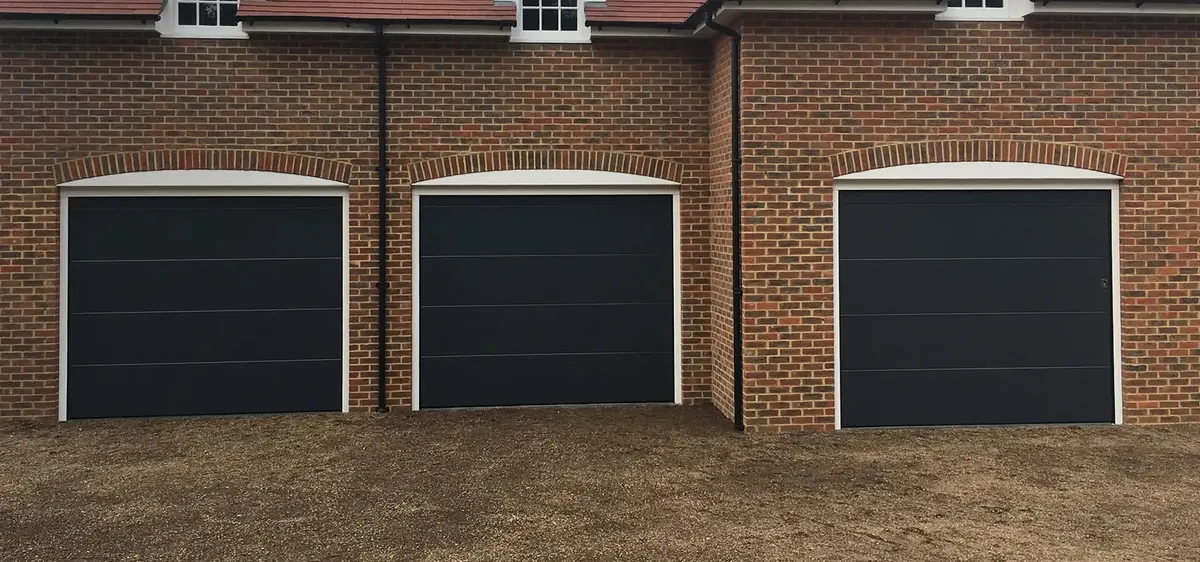
A garage door at a single-family home may open and close a handful of times a day. A garage door at an apartment building, a condo garage or a small business can open and close dozens or hundreds of times. It serves many people who did not buy it, do not own it and may not report a problem until it stops working.
This is a different kind of repair. The parts are often heavier. The wear is faster. The consequences of a failure reach more people. Residents cannot park, tenants cannot leave, deliveries cannot come in. Managers must respond quickly and document what happened. This page explains how commercial and multi-unit doors differ, what fails, how to plan repair and maintenance, and what information we need to help you.
Who this page is for
- Property managers of apartment buildings and condominium complexes.
- HOA and condo association boards.
- Landlords with rental properties and shared garages.
- Owners of small offices, shops, studios and service businesses with roll-up or sectional doors.
- Mixed-use building owners with parking garages and street-level doors.
If you own a single home and use one door, our residential services are the better fit.
What makes commercial and multi-unit doors different
Higher cycle counts
Cycle life is the number of open-and-close cycles a spring can perform before it is likely to fail. Residential springs are commonly rated around 10,000 cycles. A garage serving many units can reach that in a matter of months. High-cycle springs are available with much longer ratings. They cost more but often save money on a door that runs all day.
Heavier doors and hardware
Commercial doors are often larger and heavier. They use heavier springs, stronger tracks and thicker hinges. Rolling steel doors coil up on a drum above the opening. They are common in shops and service buildings.
Different door types
| Door type | Where you see it | Common repairs |
|---|---|---|
| Sectional door | Apartment garages, offices, larger homes | Springs, cables, rollers, panels, openers |
| Rolling steel door | Shops, storage, service bays | Springs and shaft, guides, curtain damage, operators |
| Grille or gate | Parking entries, storefronts | Operators, tracks, locks, wiring |
| Sliding or swing gate | Driveway entries to shared parking | Operators, sensors, access control |
Access control and shared use
Multi-unit doors often work with keypads, fobs, cards, intercoms, loops or phone apps. That adds electronics and wiring, and it adds questions about who has access. Repairs may involve the door, the operator and the access system together.
Liability and documentation
A failed door can affect tenants, visitors and vehicles. A written record of inspection and repair helps managers respond to tenants, insurers and owners.
Common problems in multi-unit and commercial garages
Worn springs and cables
The most frequent failure is spring wear caused by high cycle counts. It often comes with worn cables and drums. A door that has run for a long time on standard springs is a strong candidate for high-cycle replacement.
Impact damage
Vehicles hit doors in tight garages and loading areas. A single impact can bend tracks, damage panels or crack rollers. Bollards, guides or curb stops can reduce the risk.
Opener wear
Openers in busy garages work harder. Heavy use causes wear in gears, trolleys and boards. A commercial-grade or wall-mounted operator may last longer than a standard residential unit.
Sensor and safety problems
Dirt, moisture, vibration and traffic knock sensors out of line. A failed sensor may stop the door from closing, which leaves the garage open. Bypassing a sensor puts people at risk.
Access control faults
Card readers, keypads and receivers fail. Intercoms lose connection. Lost fobs and shared codes create security gaps.
Weather damage
Salt air, moisture and dust shorten the life of hardware and electronics. Doors open to the outside and gates on street frontages are most exposed.
Deferred maintenance
When nobody is responsible for a door, it often goes without service until it fails. Then it fails at a bad time.
Roll-up doors for shops and service buildings
Rolling steel doors are made of interlocking slats that wind around a barrel above the door. A counterbalance spring inside the barrel lifts most of the door's weight. Operators may be chain hoists, motor operators or gear-driven units.
Common roll-up problems
- Spring fatigue in the barrel, leaving the door heavy or slow.
- Bent or damaged slats from impact.
- Guides that are bent or blocked, causing the door to jam.
- Worn or broken operator parts.
- Rust on the curtain, guides and hood.
Tell us the width and height of the door, its age and the operator type. Photos help us prepare parts.
Parking garages and underground entries
Many apartment and mixed-use buildings in Santa Monica have parking below grade or behind street-level doors. These entrances see heavy traffic. They may combine a sectional or roll-up door with an access system and sometimes a gate.
Points to keep in mind:
- Cycle life. A door serving dozens of units is a strong case for high-cycle springs and commercial hardware.
- Vehicle safety. Sensors and safety edges must work consistently.
- Access for emergency services. Ask your building's team how emergency access is provided.
- Ventilation and moisture. Below-grade garages can be damp, which speeds corrosion.
- Noise. Neighbors above may be sensitive to loud doors. Quieter operators and lubrication help.
Condominiums and homeowner associations
Condo garages raise ownership and approval questions.
- Who owns the door? Some doors belong to the association. Others belong to the individual owner. Check your governing documents.
- Who pays for repairs? This may depend on whether the door is common area or a unit component.
- Who approves replacement? Style, color and window patterns are often set by the community.
- How do you report problems? A clear process helps residents and managers.
We provide written quotes that list parts and labor so boards can review and approve. If you need several doors serviced, tell us the count and locations.
Rental properties and property managers
Landlords and property managers have specific needs.
- Speed. A door stuck open or closed affects tenants right away.
- Records. A written quote and invoice documents the repair.
- Tenant communication. Tenants need to know when the door will be repaired and how to use it safely.
- Safety. Keep sensors and auto-reverse working. Do not allow tenants to bypass them.
- Preventive care. A regular inspection reduces the number of emergency calls.
If a tenant calls us, we will ask whether the owner or manager must approve the work. That keeps the repair authorized and the billing clear.
How to plan garage door and gate maintenance for a property
A little planning goes a long way. Here is a simple approach for managers.
- List every door and gate. Note the location, type, size, age, opener or operator model and access system.
- Assign an owner. Someone should be responsible for each door.
- Set an inspection schedule. Busy doors may need checking more often than quiet ones.
- Keep a log. Record inspections, repairs, part replacements and problems reported.
- Plan for spring replacement. If springs are near the end of their rated cycles, replace them on your schedule instead of in an emergency.
- Plan for openers. Set aside budget for opener replacement as units age.
- Communicate with residents. Tell them how to report problems and how to use the release safely.
If you want us to look at your properties, call (424) 610-8406 and describe what you have. We give a written quote for the work.
Emergencies at multi-unit properties
When a shared door fails, residents are affected right away. A quick, organized response helps.
- Post a notice to residents to stay away from the door and not force it.
- Note which door or gate is affected and what it is doing.
- Secure the property if a door cannot close.
- Take photos of any damage for records and insurers.
- Call us at (424) 610-8406 and give the address, the number of doors, the door type and access details.
See also our emergency repair guide. We do not promise arrival times on this website, but we tell you what is possible when you call.
Safety and compliance for shared doors
Some rules and standards affect commercial and multi-unit doors.
- Entrapment protection. Automatic doors and gates must include devices that stop and reverse when something is in the way. This is a safety standard, UL 325, that manufacturers follow.
- Battery backup. California requires battery backup on residential garage door openers installed since July 1, 2019. Commercial installations follow different rules, and you should ask your installer about what applies.
- City requirements. The City of Santa Monica requires permits for many building alterations. Replacing a door in a commercial or multi-family building may involve review if the work affects safety, occupancy or structure. Check with the city before making major changes.
- Fire-rated openings. Doors in fire-rated walls have special requirements. If your door serves such an opening, involve the right specialists.
We give practical guidance about the door and hardware, but we do not provide legal or code advice. Confirm code questions with the city or your building consultant.
What to tell us when you call
- The property address and what type of building it is.
- How many doors and gates are involved.
- The door type: sectional, roll-up, grille or gate.
- The size of the door and its approximate age.
- What the door is doing and when it started.
- The opener or operator brand and the access system.
- Any access issues, such as gate codes, limited hours or tenant coordination.
- Who can approve the work and who receives the invoice.
Commercial and multi-unit repair in Santa Monica
Mixed-use and downtown buildings
Buildings in the downtown and beachfront area often mix apartments, condos and shops, with parking below or behind. Salt air is strongest here, and traffic is high. See our page for ZIP 90401.
Corridors with businesses
Streets such as Lincoln Boulevard have many small businesses and multi-family buildings. Roll-up doors, service bays and alley entries are common. See ZIP 90404.
Older multi-family buildings
Older apartments may have tandem garages, narrow openings and aging doors. Parts can be hard to find, and a full replacement may be more sensible.
Alley entries
Many garages in Santa Monica open to alleys. Tight space, parked cars and limited turning room affect service. Tell us how the alley works.
Choosing parts and doors for heavy use
If a door works hard every day, the parts you choose matter. Here are the decisions that most affect how long a busy door lasts.
Springs
High-cycle torsion springs are usually the first upgrade for a busy door. They use different wire and coil design to give a longer rated life. Ask what rating is offered and how it compares with a standard spring.
Rollers and hinges
Sealed bearing rollers and heavier hinges resist wear. In busy doors, cheap rollers are a false saving.
Cables and drums
Use cables with a correct rating for the door's weight. Check the drum grooves for wear. Replace cables in pairs.
Tracks and mounting
Heavy doors need strong tracks with solid mounting. Inspect the brackets and wall fastenings. A track that pulls away from a wall is a safety issue.
Operators
Choose an operator sized for the duty cycle. Residential units used in a busy garage can overheat and wear out early. Wall-mounted and commercial-grade operators exist for this use.
Safety devices
Photo eyes and edge sensors should be protected from impact and dirt. Use brackets that resist knocks. Test them often.
Materials and finishes
Doors that face the street, the sea air and daily traffic need finishes that can take it. Aluminum, galvanized steel and coated hardware last longer in coastal conditions.
A sample inspection checklist for a shared garage door
Managers and maintenance staff can use this list to check doors between professional visits. Keep a copy with your log.
| Item | What to check | Action if not right |
|---|---|---|
| Door movement | Smooth, level, no jerking or scraping | Stop use and call |
| Springs | No gaps, rust or stretching | Call for replacement |
| Cables | No fraying, kinks or slack | Call for replacement |
| Rollers and hinges | No cracks or wobble | Schedule replacement |
| Tracks | Straight, tight, free of debris | Clean or call |
| Opener | Runs smoothly, no burning smell | Call if noisy or hot |
| Auto-reverse | Reverses on contact with a board | Stop use and call |
| Photo eyes | Aligned, clean, steady lights | Clean, realign, or call |
| Access control | Keypad, fob or reader works | Reset, replace batteries, or call |
| Seals | No gaps at bottom or sides | Schedule replacement |
| Signage | Warnings and instructions visible | Replace as needed |
This is a manager's checklist, not a substitute for a trained technician. It catches obvious problems early.
Working with tenants and residents
People who live in a building use the garage door without thinking about how it works. A few communication steps prevent problems.
- Post clear instructions on how to use the door and what to do if it fails.
- Tell residents not to bypass sensors, prop doors open or force stuck doors.
- Share a single contact number for reporting problems.
- Explain planned repair windows in advance so residents can plan around them.
- Explain how the manual release works, if residents are allowed to use it.
- Remind residents to avoid tailgating through the gate or door.
When we visit a property, we work around resident traffic as much as we can. We ask managers to tell us about times and areas that are difficult.
Budgeting for garage door and gate work at a property
Managers often ask how to budget for doors. There is no single figure, because doors differ in size, age and use. These principles help.
- Treat springs as a consumable. A busy door will need new springs on a cycle. Plan the replacement instead of waiting for a failure.
- Replace openers on a schedule. Set aside funds as units age.
- Keep a repair fund for impact damage. Shared garages get hit.
- Compare repair and replacement over several years. A very old door with frequent repairs can cost more to keep than to replace.
- Ask for itemized quotes. They make it easier to compare and approve.
For published price ranges on common repairs, see the cost guide. Those are residential averages. Commercial doors usually cost more because the parts are larger and heavier.
Common mistakes we see with shared doors
- Waiting for a complete failure before calling.
- Letting residents bypass sensors to make a door close.
- Using residential parts on doors that run all day.
- Not knowing who owns or approves repair of a door.
- Keeping no record of past repairs.
- Ignoring rust on cable ends, brackets and guides.
- Leaving a broken door open and unsecured.
Avoiding these saves money and headaches. A short plan and a log go a long way.
When to call before something breaks
If a shared door is slower than it used to be, louder than usual, shakes when it runs or needs a second try to close, call before it stops. Those are the early signs of springs, rollers or sensors near the end of their life. A planned repair during a quiet time is easier on tenants, staff and budgets than an emergency one. Call (424) 610-8406 and describe what you see, and we will tell you whether it can wait.
Ask us to look at every door
If a property has several doors and gates, one call can cover them. Ask for an inspection of each and a written summary. You get a picture of which need work now and which can wait, and you can plan a budget instead of reacting to each failure.
Frequently asked questions about commercial and multi-unit garage door repair
Do you repair garage doors for apartment buildings and condos?
Why do garage doors in busy buildings fail sooner?
Can you repair roll-up doors for shops?
Who is responsible for a condo garage door, the owner or the association?
Can you work with property managers and provide records?
Should a busy building use high-cycle springs?
What do I do if a shared garage door is stuck?
Do you help with garage gates and access control?
Managing doors or gates for a Santa Monica property?
Call and tell us what you have and what is failing. We will give you a free written quote you can pass to your owner or board.
Call (424) 610-8406