A new garage door is one of the larger exterior changes you can make to a house. On many homes the garage door takes up a big share of the street-facing wall. It affects curb appeal, comfort, noise, security and energy use. It also has to work safely thousands of times.
This page helps you decide whether to replace, what to choose and what to expect. It covers materials, insulation, styles and windows, coastal conditions, city and association rules, opener compatibility, measuring, installation steps and published costs. If the door is still repairable, read the services overview first. Repair is often the better value.
When to replace instead of repair
Most garage door problems can be repaired. Replacement makes sense in a few situations.
Damage that repair cannot fix
- Multiple panels are cracked, creased, dented or rusted through.
- The door has been hit hard enough to twist the whole section.
- The frame or jamb is damaged and cannot hold the door true.
Age and repeated repairs
- The door is quite old and parts are hard to find.
- You have had several repairs in a short period.
- The door is not insulated and the garage has become a living or working space.
Changes to how you use the garage
- You want a quieter door under a bedroom.
- You want a new look for a renovated house.
- You want better security or a modern opener.
- You are converting part of the garage into a workspace.
Panel replacement as a middle option
If only one or two sections are damaged, replacing a section may work. It depends on whether the manufacturer still sells a matching panel and whether the color will match. Photos and the door brand help us tell you. For published price ranges, see the cost guide.
Garage door materials
Materials affect weight, cost, maintenance and how the door handles coastal weather.
| Material | Strengths | Trade-offs |
|---|---|---|
| Steel | Strong, wide choice of styles, often the best value | Can dent. Can rust if the finish is damaged. |
| Insulated steel | Quieter, stiffer, better temperature control | Heavier. Costs more than plain steel. |
| Aluminum and glass | Modern look, resists rust, lets in light | Less insulation. Glass can be a privacy issue. |
| Wood | Rich look, can be custom-made | Heavy. Needs regular finishing. Can swell in moisture. |
| Wood-look composite or steel | Looks like wood with less maintenance | Quality varies. Check finish and warranty. |
| Fiberglass | Resists corrosion, lightweight | Can crack on impact. Fewer style choices. |
Materials for coastal homes
Salt and moisture near the ocean speed up rust on unprotected steel. Aluminum frames, fiberglass, and steel with protective coatings are generally better suited to coastal conditions than bare steel. Hardware matters as much as the panels. Ask about galvanized or coated springs, cables, hinges and fasteners. Wood needs a well-maintained finish to resist moisture.
Insulation and comfort
An insulated door makes a difference if the garage is attached to the house, if you use it as a workspace or if it faces a hot afternoon sun.
- Uninsulated single-layer steel. Light and low in cost. Little thermal or sound benefit.
- Two-layer steel with a backer. A thin layer of insulation, often polystyrene, is added behind the steel.
- Three-layer steel with a foam core. Foam is injected or laminated between two layers of steel. These are quieter and stiffer, and they insulate best.
Insulation is rated by R-value. A higher R-value means better resistance to heat flow. Real-world results depend on the garage, the seals and the wall around the door. Insulation also makes a door heavier, which affects springs and opener needs.
Styles, panels and windows
Common styles
- Raised-panel. A traditional look with rectangular panels.
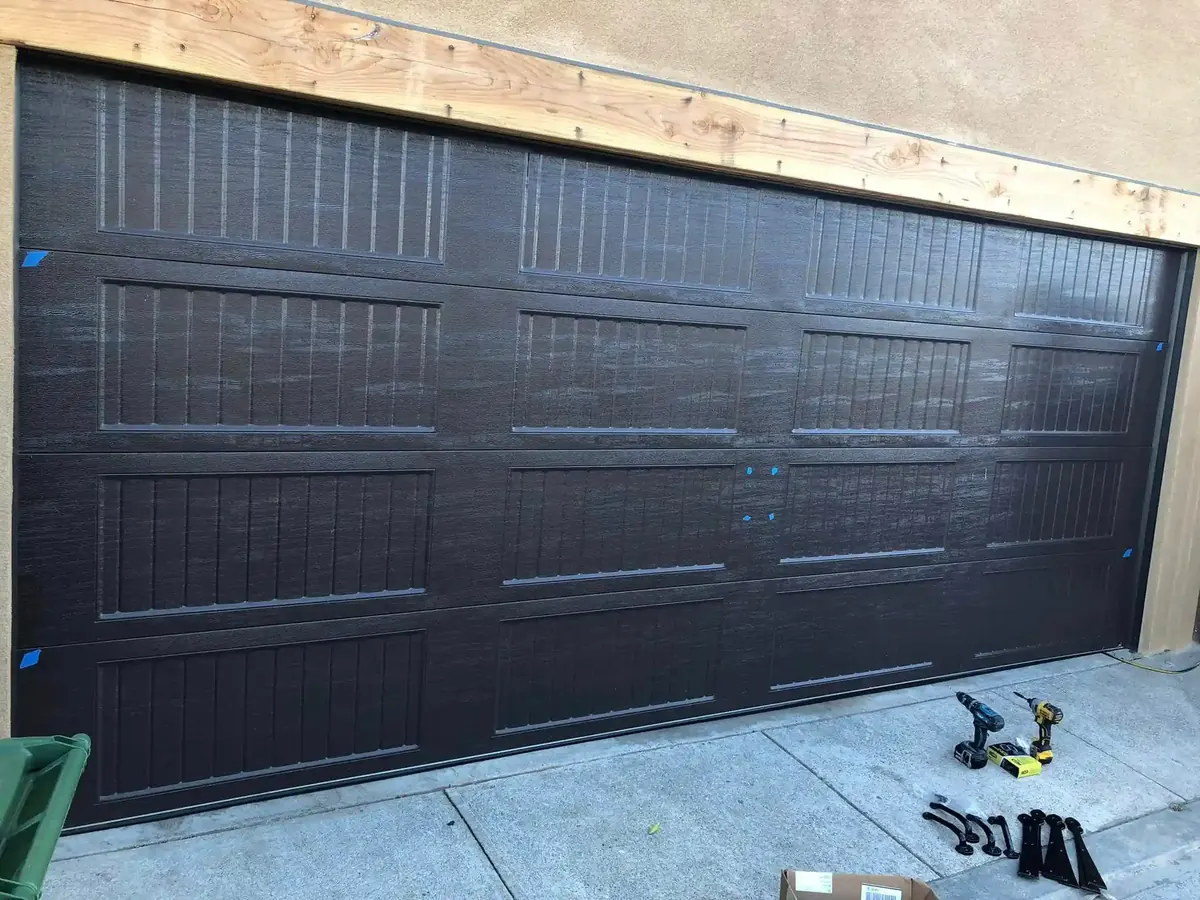
- Carriage house. Looks like swinging barn doors but rolls up like a sectional. Often has decorative hinges and handles.
- Flush or modern. Smooth panels with clean lines, sometimes with horizontal grooves.
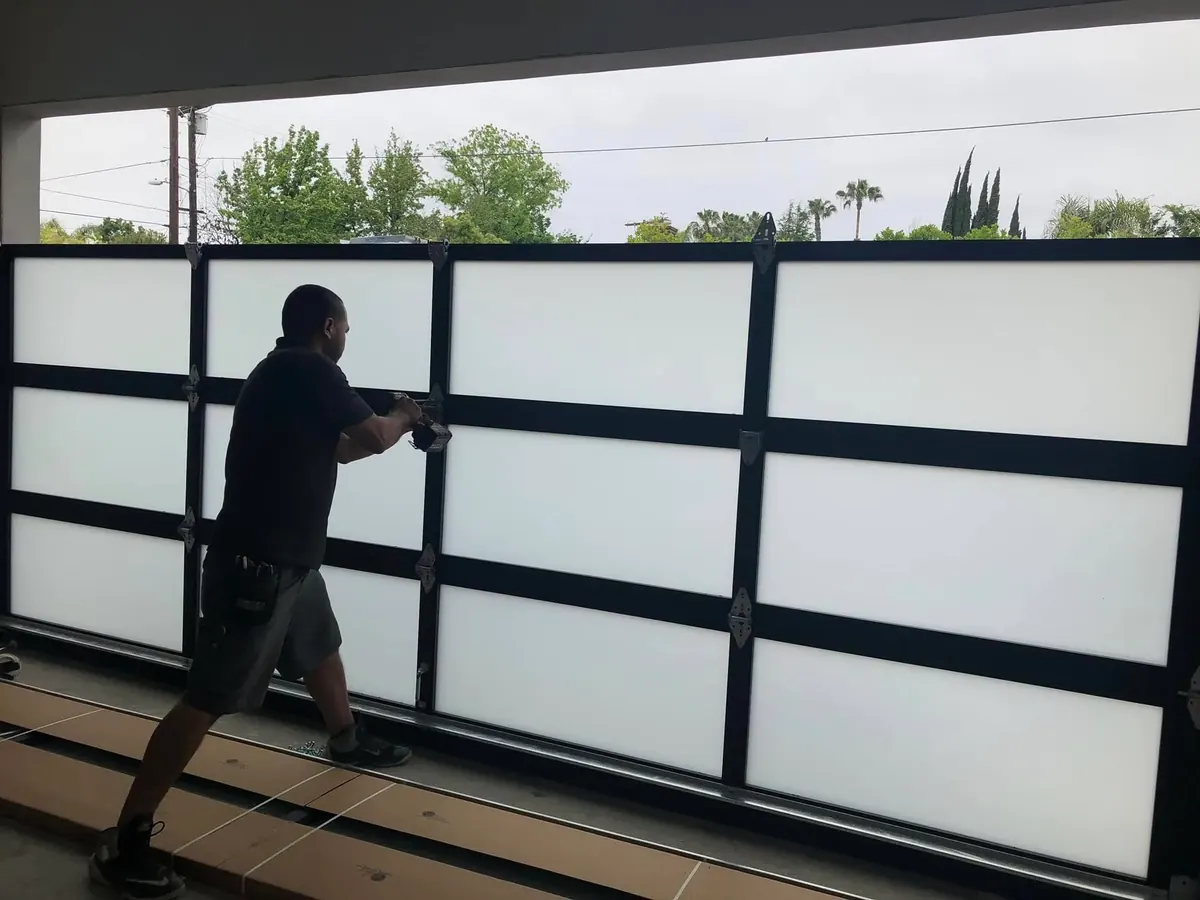
- Full-view glass. An aluminum frame with glass or translucent panels. Popular on modern homes and converted garages.
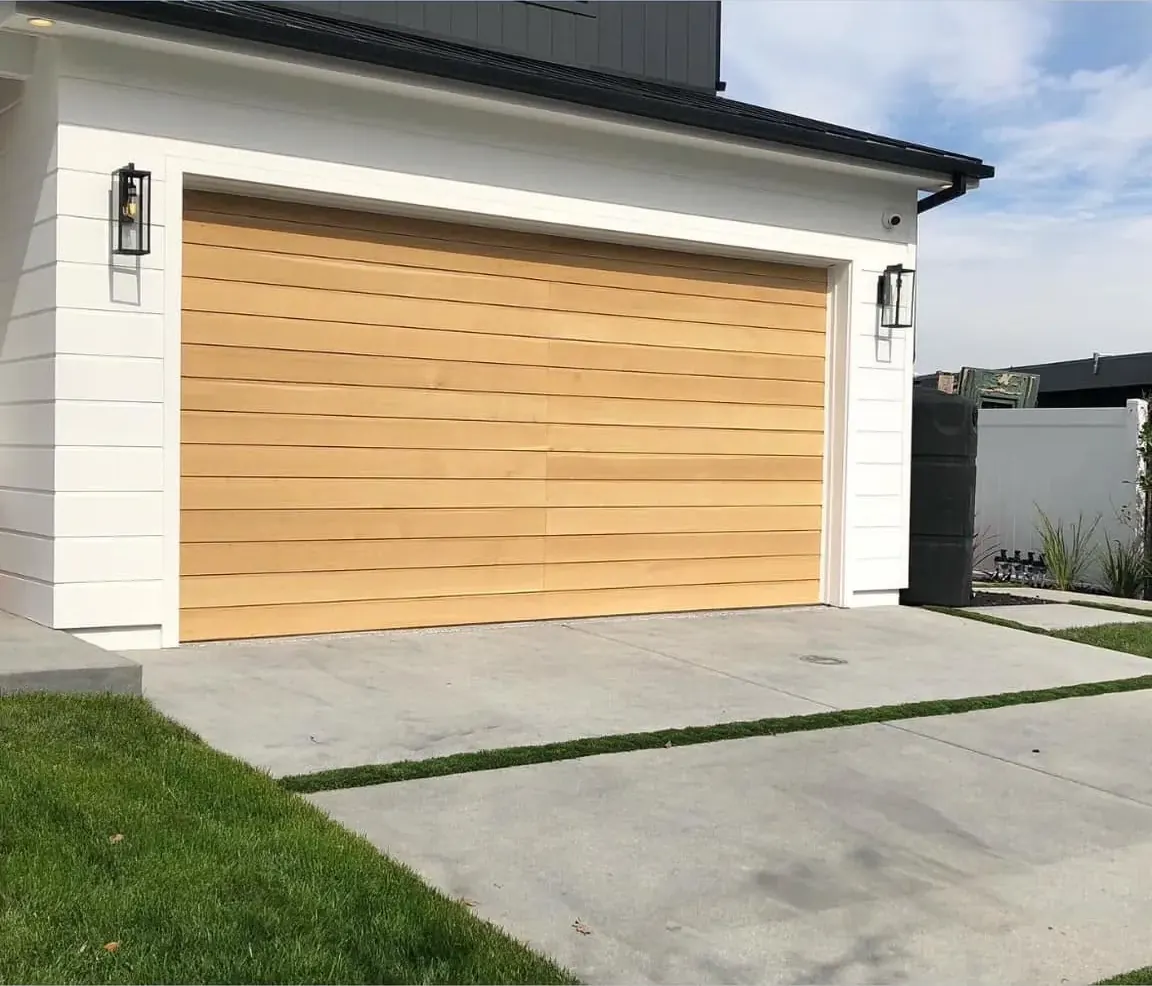
- Wood-look. A wood grain finish or real wood boards.
Windows and privacy
Windows bring in daylight and add style. Placement matters. Windows at the top let in light without showing the inside. Full rows at eye level offer the most light but the least privacy. Frosted or tinted glass is common in full-view designs. Consider whether you store items in the garage that you would not want seen from the street.
Color and finish
Dark colors look sharp but absorb heat. On a sun-facing wall they can warm the panels and the garage interior. Lighter colors reflect heat. Confirm that the finish is rated for exterior use and for salt air if you are near the beach.
Matching the house
A door that fits the architecture of the house looks better and holds value. A traditional home suits carriage or raised-panel doors. A modern home suits flush or full-view doors. Older homes may need a simple design that respects their character.
Rules that affect a new garage door in Santa Monica
City permits
The City of Santa Monica generally requires building permits for construction, alteration and repair work. Its permit guides list door and window replacement among the minor single-trade projects. Whether you need one depends on your address and on what changes. A door that changes the size of the opening or involves structural work is different from a like-for-like replacement. Check with the city's Permit Services Center before you order.
Design review
The city notes that the Architectural Review Board reviews exterior alterations in residential districts other than R-1. Designated City Landmarks and contributing structures in historic districts go before the Landmarks Commission, which has a minimum waiting period. If your home might be a landmark or in a district, check first.
Coastal zone
Some projects in the Coastal Zone involve additional review. A simple door swap is not usually a big issue, but ask the city if your address is within the zone and you plan to change the exterior.
Condos and associations
If your home is part of an association, the rules may control door style, color, windows and materials. Get approval in writing before you order.
Garage conversions and ADUs
If you plan to convert a garage to living space, other rules apply, including the permit process for the conversion itself. A garage door in a converted space may be replaced with a wall or a window system. Talk to the city's planning staff before you order a door for a garage that will change use.
We cannot give legal or permit advice, but we can tell you what we know about the door and help you ask the right questions.
Opener compatibility and California's battery backup rule
A new door is not complete without an opener that suits it. Under California law, residential openers manufactured, sold, offered for sale or installed on or after July 1, 2019 must have a battery backup function. The law is Senate Bill 969, in the state Health and Safety Code. It also says a replacement residential garage door may not be connected to an opener that lacks the required backup. The civil penalty is $1,000 per opener.
In practice, this means that if you replace your door and your existing opener does not have a backup, you will need a new compliant opener. Ask us about it before you order. We explain which options fit your door and budget. You can learn more on the opener repair page.
A new door also changes the load on the opener. A heavier insulated door may benefit from a stronger unit. A lightweight aluminum door may not.
Measuring for a new garage door
Correct measurements are the difference between a smooth install and a lot of trouble. We take them on site, but it helps to understand what is measured.
- Opening width. Measured across the inside of the jambs, at the widest point.
- Opening height. Measured from the floor to the header, at the lowest point.
- Headroom. The space between the top of the opening and the ceiling or any obstruction. Standard tracks need a set amount. Low headroom needs special hardware.
- Side room. The space beside the opening for the vertical tracks. Usually a few inches on each side.
- Backroom. The depth of the garage. The door and opener rail run along the ceiling.
- Floor condition. An uneven floor can leave gaps at the bottom of the door.
Older Santa Monica garages sometimes have unusual sizes. A garage built decades ago for smaller cars may be narrow or low. Custom sizes cost more and take longer.
How a garage door installation works
- Consultation. You describe what you want. We look at the opening, the walls, the headroom and the opener.
- Quote. You receive a free written quote that lists the door, hardware, labor and any extras.
- Selection. You choose material, style, color, windows and insulation.
- Preparation. Measurements are confirmed. Any permit or association approval is arranged.
- Removal. The old door, springs and tracks are safely taken down. The springs are unloaded first.
- Installation. New tracks and panels are installed. Hinges, rollers and springs are fitted and balanced.
- Weather sealing. Bottom seal and perimeter weatherstripping are installed.
- Opener setup. The opener is connected, set and tested for auto-reverse and sensors.
- Walkthrough. We show you how to use the release cord and how to care for the door.
Timing depends on the door and the site. Custom or special-order doors take longer than stocked models. Tell us your timeline when you call.
What a new garage door costs: published ranges
We do not print prices, because doors vary too much. We do give you a free written quote. To help you plan, here are published ranges. They are not our quotes.
- A HomeGuide Santa Monica installer page lists $550 to $1,300 for a single door and $800 to $1,800 for a double door installed. It lists door prices of $400 to $1,100 and labor of $150 to $700.
- A July 2026 guide from a Santa Monica garage door company says a full door replacement ranges from about $800 for a basic single-layer steel door to $3,500 for an insulated, premium door with smart opener integration.
- HomeGuide lists opener installation at $250 to $500 for materials and labor.
The wide spread reflects real differences. A basic steel door on a standard opening is one job. A custom full-view glass door on a wide opening is another. The main cost drivers are size, material, insulation, windows, hardware, the opener and any changes to the opening. See the cost guide for a fuller breakdown.
Replacing a door in Santa Monica homes
Small bungalows and older homes
Many older Santa Monica houses, including original homes in areas like Sunset Park built in the 1920s through the 1940s, have modest garages. A new door should respect the scale of the house. Keep the style simple, and check headroom and side room carefully.
Larger homes and custom designs
Homes with larger lots, such as many in North of Montana, often use wider doors or double doors with wood or wood-look finishes. These are heavier and need matching springs and hardware. Custom sizes mean longer lead times.
Modern renovations
Modern remodels often use full-view aluminum and glass doors to bring in light and match clean-lined architecture. These suit workspaces and conversions. Think about privacy and insulation.
Condos and apartments
Shared garage doors are often chosen by the association or owner. The priority is usually durability and cycle life. See commercial and multi-unit garage doors.
Salt air
Near the beach, choose corrosion-resistant materials and hardware. Ask about finish warranties and what they cover.
Caring for a new door
- Wash the door with mild soap and water a few times a year.
- Lubricate moving parts twice a year.
- Test the balance and safety reversal twice a year.
- Repair chips in the paint or finish before rust starts.
- Keep records of the door model, spring rating and install date.
Our maintenance guide gives a full checklist.
Choosing between a new door and a refresh
A full replacement is not the only way to improve an old door. If the door works and the panels are sound, you can refresh it at a lower cost.
- New rollers, hinges and cables. Restores smooth, quiet operation.
- New springs. Restores balance and lift.
- New bottom seal and weatherstripping. Improves comfort and keeps out pests.
- A new opener. Adds a quieter drive, battery backup and better security.
- Paint or a new finish. Improves looks if the panels are sound.
A refresh often extends the life of a decent door by years. A full replacement makes sense when the door itself is beyond saving or when you want a different look, insulation or material. We give you both options and quote them in writing so you can compare.
Questions to ask before you order a new door
- What is the door made of, and what is the finish? Ask how the finish holds up in salt air.
- What is the insulation type and R-value? Ask whether the number is for the panel or for the whole door with seals.
- How much does the door weigh? The spring is selected from the weight.
- What springs and hardware are included? Ask about cycle rating and coatings.
- Is the opener compatible and compliant? Ask about battery backup.
- What is the lead time? Custom doors take longer.
- What is the warranty on the door, hardware and labor? Get it in writing.
- Do I need a permit or approval? Ask before you order.
- What will happen to the old door? Removal and disposal should be part of the quote.
We are glad to answer these questions before you decide.
Wind, noise and security
Noise
Door noise comes from the panels, the hardware and the opener. Insulated doors dampen sound. Nylon or sealed rollers reduce rattle. A belt-drive or wall-mount opener runs more quietly. If your garage is below a bedroom, plan for quiet parts.
Wind
Large panels and glass catch wind. Coastal wind can be strong. Ask whether the door is reinforced and whether the hardware is rated for the size. Wide doors may need extra struts.
Security
A door is only as secure as its opener and locks. Rolling-code openers prevent simple code copying. Some doors have a manual lock or a slide bolt. If your garage door has a window, consider whether it lets someone see or reach the release cord.
What to do with your old door
An old door is heavy and awkward. Removal should be part of the job. Ask whether removal and disposal are included in the quote. Steel and aluminum doors can often be recycled. If the door is in decent shape and you do not need it, ask about donating it. Do not leave springs or tension hardware for anyone to handle. Old springs may still hold energy and should be unloaded by a trained technician before removal.
Frequently asked questions about garage door installation and replacement
How much does a new garage door cost in Santa Monica?
Do I need a permit to replace my garage door in Santa Monica?
Do I need a new opener with a new garage door?
What is the best garage door material for a coastal home?
Is an insulated garage door worth it?
Can I replace just one damaged garage door panel?
Do I need approval from my HOA or condo board?
How long does garage door installation take?
Thinking about a new garage door?
Call to talk through your options. We will look at the opening, discuss materials and give you a free written quote.
Call (424) 610-8406