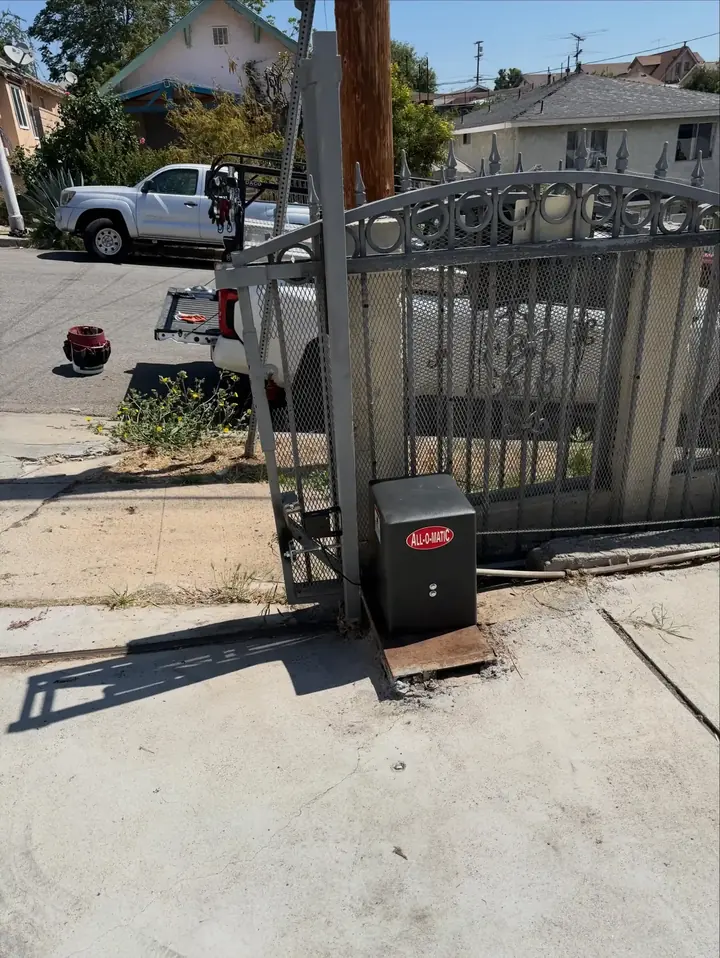
A driveway gate does two jobs at once. It keeps a property secure, and it must open and close for the people who live there. When it fails, both jobs fail. The gate may be stuck open, which leaves the property exposed. Or it may be stuck closed, which leaves residents and visitors locked out.
Gates are outdoors. They face sun, rain, dust, salt air and daily use. They often carry a heavy load of metal or wood. That makes them more demanding than a garage door in some ways. This page explains the common gate types, what usually goes wrong, what you can check yourself and how we repair gate systems.
Types of driveway gates
Sliding gates
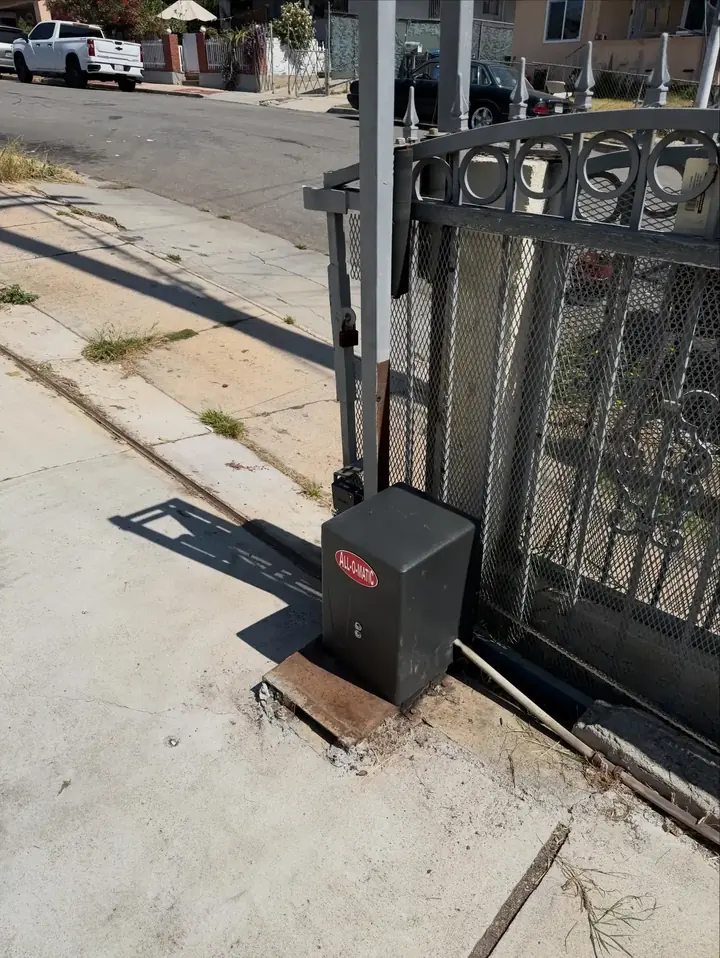
A sliding gate moves sideways along a track or on rollers, parallel to a fence or wall. It suits properties with a straight driveway and room beside the opening. It works well where the driveway slopes up from the street, since it does not swing into traffic. It needs a clear path along its run.
Swing gates
A swing gate opens like a door, on hinges. Single-leaf gates suit narrow openings. Double-leaf gates suit wider ones. They need clear space on the swing side. On a sloped driveway they may need special hinges or an operator that lifts.
Materials
- Ornamental iron or steel. Strong and traditional. Needs paint or coating to resist rust.
- Aluminum. Lighter and more rust-resistant.
- Wood. Warm appearance, but heavy and prone to swelling and warping.
- Vinyl or composite. Low maintenance, lighter weight.
How a gate operator works
An automatic gate has an operator, which is the motorized unit that moves it. Its type depends on the gate.
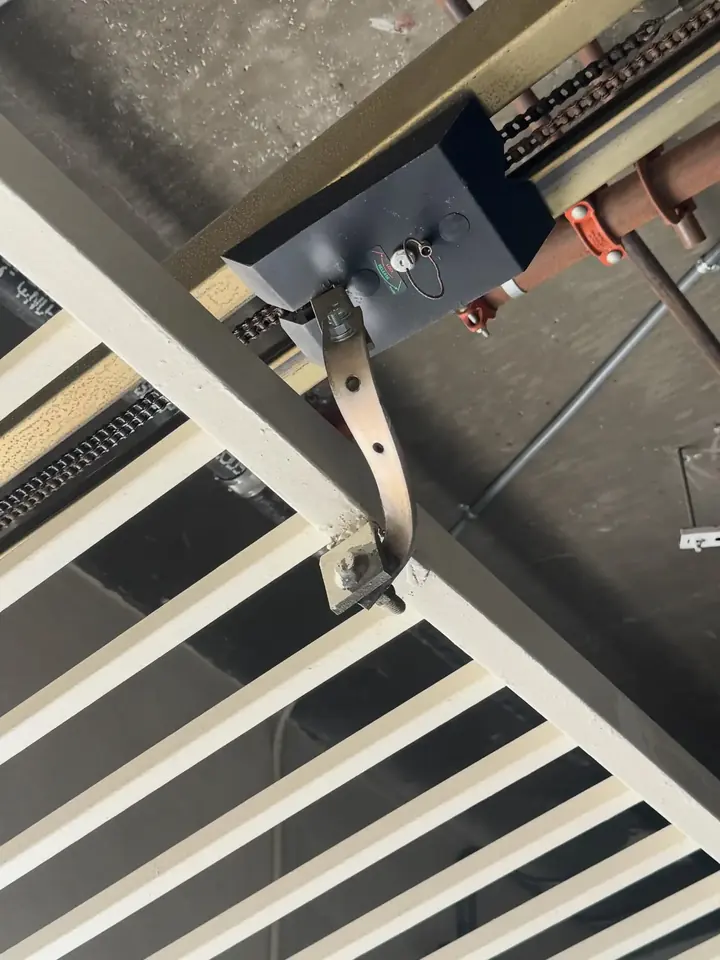
- Slide operators. A motor drives a chain, a rack or a wheel that pulls the gate along its track.
- Swing operators. A motorized arm, either a linear actuator or an articulated arm, pushes and pulls the gate leaf.
- Underground operators. The motor is hidden below the gate and turns the hinge post.
An operator has a control board that takes input from remotes, keypads, intercoms, loop detectors and safety sensors. It runs the motor, tracks the gate position and stops it if something is in the way. Many operators have backup batteries or solar panels for power outages. Most have a manual release, typically a key or lever, that lets you open the gate by hand.
Common gate problems and what they mean
The gate will not open or close
- No power to the operator, or a tripped breaker.
- A dead battery in the backup system.
- An obstruction in the path, such as a stone, leaves or a vehicle.
- A safety sensor that is blocked or misaligned.
- A failed control board or motor.
- The gate has been manually released and not reset.
The gate opens but will not close
This often points to a safety sensor, an obstruction or a stuck limit switch. Operators are built to keep the gate open if they think something is in the way.
The gate starts to close and then reverses
The operator senses resistance or a blocked beam. Causes include a tight track, a bent hinge, a sagging gate leaf, dirty sensors or force settings that are too low.
The gate moves slowly or jerks
Worn rollers, a dry track, low battery power, a failing motor or a sagging gate can cause this.
The gate makes grinding or clicking noises
The drive chain, rack or gear may be worn or dry. Loose bolts and misaligned parts also make noise.
The remote or keypad does not work
Replace the battery first. If it still fails, the remote may need reprogramming, or the receiver may be faulty. A keypad may be exposed to moisture or damaged.
The gate is off its track or leans
Sliding gates can jump the track, and swing gates can sag on their hinges. Both put stress on the operator and create safety risks.
The intercom or entry system fails
Multi-unit properties often have call boxes or access control. Wiring, power and phone connections are the usual suspects.
What you can check yourself
- Look at the power. Check the breaker and any visible fuses. Check whether a battery or solar panel is connected.
- Clear the path. Remove sticks, stones and debris from the track or swing area.
- Wipe the sensor lenses. Check that they are aimed at each other.
- Change remote and keypad batteries.
- Check the manual release. If the gate was released, re-engage it as the manual instructs.
- Note the behavior. Write down what the gate does, what noises it makes and any lights or codes on the control board.
Safety devices on automatic gates
Automatic gate operators are covered by a safety standard, UL 325, that requires protection against entrapment. Devices commonly used include:
- Photo eyes. They send a beam across the gate path. If something breaks it, the gate stops or reverses.
- Contact or edge sensors. Sensitive strips on the edge of the gate that detect touch.
- Inherent entrapment sensing. The operator senses extra resistance and stops.
- Exit and safety loops. Wire loops in the pavement that sense vehicles.
These devices are not optional extras. They protect children, pets and vehicles. When we repair a gate we test them. If a gate has none, we explain what should be added.
How we repair a driveway gate
- Talk with you. We ask what the gate is doing and since when.
- Inspect the gate itself. We check hinges, posts, rollers, tracks and the level of the gate leaf.
- Inspect the operator. We check power, the control board, limits, force settings, motor and drive.
- Test the controls. We test remotes, keypads, intercoms and loops.
- Test the safety devices. We confirm sensors and edge devices work.
- Explain and quote. You get a plain explanation and a free written quote.
- Repair. We fix or replace what is needed.
- Final test. We run the gate through cycles and confirm safe function.
If the operator is too old or damaged, we explain whether repair or replacement makes more sense. Sometimes the fix is on the gate, not the operator, such as a sagging leaf or a dirty track.
Gate repair in Santa Monica
Salt air and rust
Coastal air corrodes iron and steel. Gate hinges, rollers, track and the base of the operator box are common trouble spots. Regular painting and lubrication slow the damage. Aluminum and coated components last longer. If your gate is near the beach, inspect it often.
Sun and heat
Sun bakes plastic covers and wiring insulation. Keypads and control boxes can become brittle. A shaded box or a weather-rated cover helps.
Sloped driveways and alleys
Some Santa Monica driveways slope toward the street or alley. That can affect swing clearance and how a gate rests when open. Tell us about the slope and the swing space.
Multi-unit and shared entrances
Apartments and condos often have gates that serve many residents. These gates cycle more, need durable operators and often have intercoms and access control. See commercial and multi-unit repair.
Pedestrians and sidewalks
Many gates open close to the sidewalk. Sensors and warning devices matter more where people walk by. If you can see the gate from the street, expect that people and pets will pass near it.
Power outages and manual release
Gates can be a hazard during an outage, whether you are trying to get in or out. Most operators have a manual release, usually a key lock or lever, that disconnects the motor so you can push the gate by hand.
- Know where the release is and how it works.
- Keep the key where you can reach it and tell the household.
- After power returns, re-engage the operator so it can control the gate.
- If you have a battery backup, replace the batteries as the manufacturer advises.
- Fire and emergency access is important. Talk to your property manager or the operator supplier if you are unsure how the gate meets access needs.
Gate maintenance
- Clean the track, and clear debris from the path.
- Lubricate hinges and rollers with a suitable lubricant.
- Check for loose bolts, cracked welds and sagging.
- Repaint chipped areas to prevent rust.
- Test the sensors and safety devices twice a year.
- Check that the gate is level and does not rub on the ground.
- Replace remote, keypad and backup batteries as needed.
Regular checks catch problems before the gate fails at a bad time. Our maintenance guide covers garage doors, and many tips carry over to gates.
Repair or replace the operator?
Operators wear out. These questions help.
- How old is the operator, and are parts available?
- Has it been repaired several times recently?
- Is the motor weak or overheating?
- Does it lack modern safety features?
- Do you want new features, such as smart control or battery backup?
If the answer to several is yes, replacement may be better. If the operator is sound and the fault is a sensor, a battery or a remote, repair is usually enough. We give you both options and a written quote. Prices depend on gate type, size, operator model, wiring and safety devices, so we do not list numbers here.
Gate control options: remotes, keypads, intercoms and apps
How people get through the gate matters as much as the motor. Access devices are also a top source of everyday complaints.
Remotes and fobs
Handheld remotes send a coded signal to the operator. Some gates use the same remote type as garage door openers, and some use their own system. If you lose a remote, ask whether the operator can erase it from memory. A lost remote is a security risk if it has your address attached.
Keypads
Wired or wireless keypads let you enter a code. They sit outdoors, so weather and sun wear them out. Sealed, weather-rated keypads last longer. Change the code when people move out.
Intercoms and call boxes
Common at multi-unit properties. The visitor presses a button, and a resident opens the gate by phone or a control panel. These use cabling or phone connections, and lightning, moisture and time all cause faults.
Exit sensors and loops
A wire loop cut into the pavement senses a vehicle and opens the gate for an exit. If loops fail, a car waits at the gate and nothing happens. Loops can be damaged by cracked pavement or construction.
Smart and app controls
Some operators connect to Wi-Fi so you can open the gate from a phone. It is convenient but adds a network dependency. Keep a physical backup, such as a remote or a key release.
Security habits
- Change keypad codes when someone should no longer have access.
- Do not leave gate remotes in parked cars.
- Keep the manual release key in a safe place, but accessible to the household.
- Do not tailgate through a gate. It defeats access control and can strike a vehicle.
Sagging gates, hinges and posts
Many gate problems start with the gate, not the operator. A heavy gate that sags puts stress on the drive. Eventually something breaks.
Why swing gates sag
- Hinges wear or loosen.
- The post moves in the ground because the footing is weak or the soil shifted.
- The gate leaf is heavier than the hardware was designed for.
- Wood gates absorb water and swell.
- Rust weakens welds and joints.
Why sliding gates bind
- Track or rollers fill with dirt or debris.
- Wheels wear flat.
- The gate frame twists or bends.
- Guide rollers at the post drift out of line.
- Uneven ground under the track heaves or settles.
What we do about it
We check hinge condition, post plumb, leaf level, roller wear and track alignment. Sometimes a tune-up of hinges and rollers is enough. Sometimes a bent frame or a failing post needs a welder or a fabricator. If the fix goes beyond what we do, we tell you plainly.
Fixing the gate before you replace the operator often solves the problem and saves money.
Solar, battery and power issues
Many gates run on stored power. Solar panels charge batteries during the day. If the batteries or panels fail, the gate slows or stops.
- Panels covered in dust, leaves or shade produce less power.
- Batteries weaken over time. Many need replacing after a few years.
- Loose or corroded terminals cause intermittent power loss.
- Extension cords and overloaded circuits are not a proper feed for an operator.
- A tripped GFCI outlet can cut power to the operator without warning.
Coastal moisture makes terminal corrosion more likely. A clean, tight, sealed connection matters more than most people think.
What to tell us when you call about a gate
A few details make the first phone call far more useful. If you can, have these ready.
- Whether the gate slides or swings, and whether it is single or double.
- The material, such as iron, aluminum or wood, and roughly how wide it is.
- The operator brand, which is usually printed on the box.
- What the gate does now and what it did before the problem began.
- Any lights or beeps from the control board.
- Whether the problem started after a power outage, a storm or an impact.
- How many people and vehicles use the gate each day.
- Whether the gate is shared with neighbors or a building.
Photos of the gate, the operator and the control board are very helpful. Take them from a safe distance and do not open the operator box if you are unsure how.
Gate repair and neighbors
Gates often sit at the boundary of a property, near a sidewalk or a shared driveway. That makes them a shared concern. A gate that stays open blocks or exposes a neighbor's space. A gate that swings into a neighbor's driveway can cause disputes. When you plan a repair, think about who else uses the gate and tell them about any downtime. If you share the gate, agree in advance who approves the work and who pays.
We give written quotes so everyone can see what is being done. Property boundaries and shared-use agreements are for you and your neighbors to sort out, but a clear quote helps.
Why gates deserve regular attention
A gate is exposed to weather and use every day. Small problems, such as a dry roller or a loose bolt, grow into big ones because the gate runs so often. A short check every few months keeps the operator from working against a gate that drags. It also keeps the gate from becoming a safety problem for people and pets.
Choosing a repair partner for a gate
Gates mix mechanical, electrical and welding work. Ask any company what they will repair themselves and what they would send to a specialist. A sagging steel leaf may need a welder. A network intercom may need an installer of that system. A good partner tells you plainly what falls inside their work.
Frequently asked questions about driveway gate repair
Why won't my driveway gate open or close?
Why does my gate close a little and then reverse?
Can you repair both sliding and swing gates?
What should I do if my gate is stuck open?
How do I open my gate during a power outage?
Does coastal air damage gates?
Are gate safety sensors required?
Should I repair or replace my gate operator?
Gate stuck, slow or not responding?
Call and describe what the gate does. We will tell you what we think is wrong and give you a free written quote.
Call (424) 610-8406